
Most people decide to try laser hair removal on a very specific kind of day. It is usually the first warm weekend of the year, somewhere between a swimsuit fitting and a razor nick, when the idea of never shaving again suddenly feels urgent. The impulse is understandable. The timing is backward. Laser hair removal works across a series of appointments spaced weeks apart, which means the smooth skin you want in June depends on a decision made the previous fall.
Laser hair removal is a medical aesthetic procedure that uses concentrated light to disable hair follicles so that less hair grows back over time. Choosing when to begin involves two separate questions. The first concerns the calendar and which months give your skin the best conditions for treatment. The second is personal and depends on your hair and your stage of life. This guide covers both, with a focus on how the schedule plays out for patients in West Melbourne and the beachside communities of Brevard County.
What Is Laser Hair Removal, and Why Does Timing Matter?
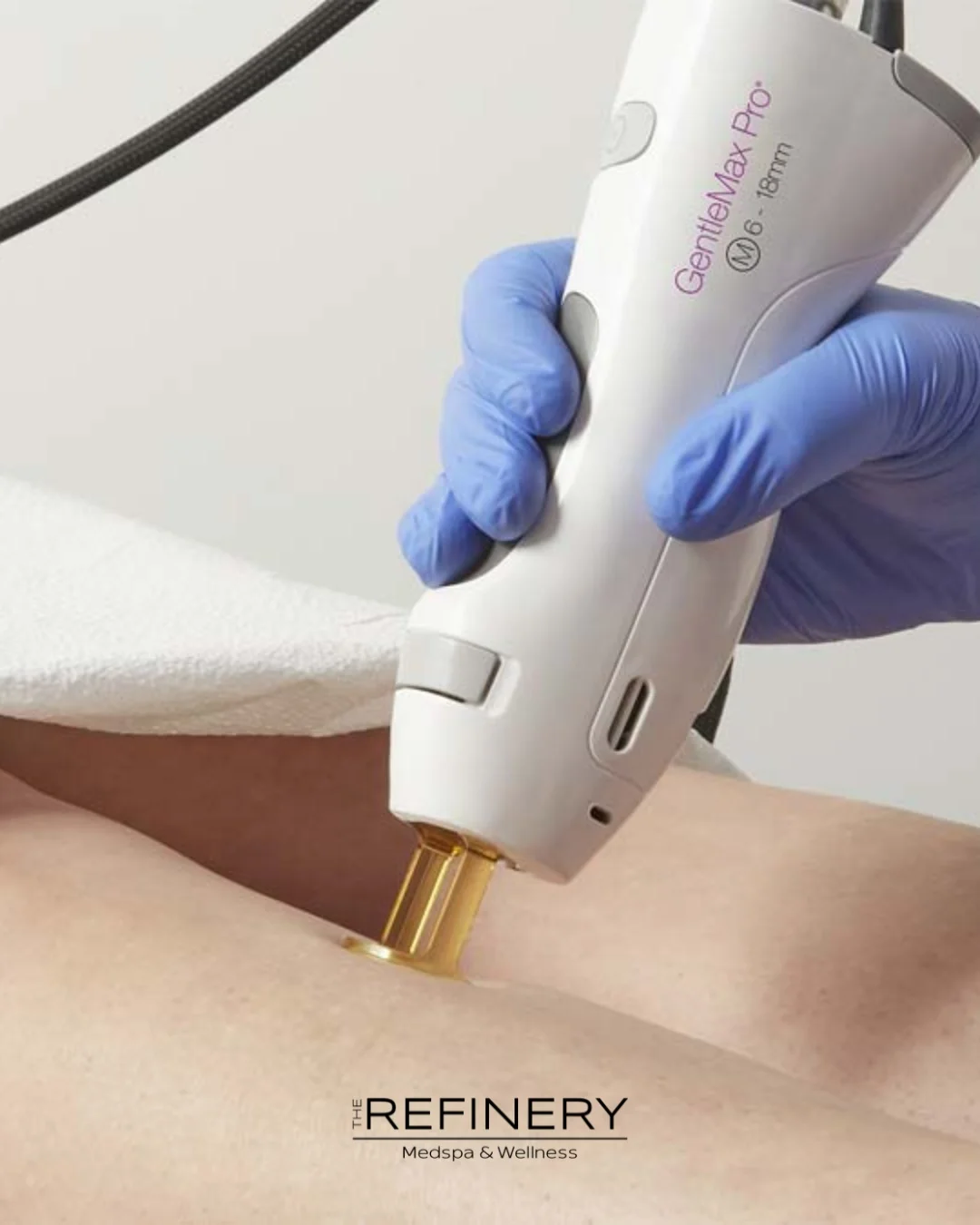
Laser hair removal is a procedure in which a laser emits light at a wavelength absorbed by melanin, the pigment found in the hair shaft and root. That light turns into heat inside the follicle and damages the structures responsible for producing new hair, a process known in dermatology as selective photothermolysis. At The Refinery, treatments are performed with the GentleMax Pro, a dual-wavelength platform that pairs a 755 nm alexandrite laser with a 1064 nm Nd:YAG laser. Having both wavelengths on hand lets a provider adjust settings for lighter and deeper skin tones. More detail on the device and treatment areas is available on our page for laser hair removal in West Melbourne, FL.
Timing matters because the laser depends on contrast. It is designed to find dark pigment in the follicle, and it performs best when the surrounding skin holds as little competing pigment as possible. Anything that darkens the skin narrows that contrast and forces the provider to lower the energy for safety, which can make a session less effective. Timing also matters because hair grows in cycles, and a treatment plan has to be built around them.
How Does the Hair Growth Cycle Shape Your Treatment Schedule?
Each hair follicle alternates between an active growth phase, known as anagen, and longer stretches of transition and rest. The laser is effective mainly during anagen, when the hair is still attached to its pigmented root. At any given moment, only a fraction of the hairs in an area are in that phase. The others sit dormant and will only respond once they cycle back into active growth, which is why one appointment never clears an area on its own.
Sessions are spaced to catch each new wave of growing hair. Facial hair cycles relatively quickly, so face and neck appointments usually fall four to six weeks apart, while the legs and back tend to sit six to eight weeks apart. Readers focused on the chin or upper lip will find more detail in our post on whether laser hair removal can reduce hair growth on the face. Most clients at The Refinery reach their optimal result after about seven sessions.
Put those numbers together and a full course for one body area usually runs between six months and a year. That range is the most useful figure for anyone trying to pick a start date. Whatever date you have in mind, count backward from it by roughly that much, and you have your answer.
Is There a Best Season to Start Laser Hair Removal?
Fall and early winter are widely considered the best season to begin, and the reasoning holds up even in Florida, where winter is more of a suggestion than a season. Two practical factors drive the recommendation.
The first is sun exposure. Providers ask patients to keep treated skin out of direct sun before and after each session and to stop using self-tanner for a couple of weeks beforehand. A tan adds melanin to the outer layer of skin, and the laser can absorb that pigment along with the pigment in the follicle. The result can be a burn, or a patch of lighter or darker skin that takes months to fade. On the Space Coast, where the UV index stays high for much of the year, sun avoidance is a constant consideration. It becomes far easier between October and March, when beach days thin out and long sleeves feel natural again.
The second factor is coverage. Treated skin can stay pink for a few hours after a session, and treated hairs continue to shed for a week or two afterward. Most people would rather move through that phase in jeans than in board shorts at Melbourne Beach.
The payoff is a schedule that lines up with summer. A course that begins in October or November is typically complete, or close to it, by late spring. The bulk of the work is done before swimsuit season, and any remaining sessions can be scheduled around beach plans instead of competing with them. The table below shows how a start month tends to play out for a body area treated roughly every six weeks.
| When you start | Conditions for treatment | Where you stand by summer |
|---|---|---|
| September to October | Sun exposure begins to ease and everyday clothing covers more skin | Most of the course is complete by June |
| November to January | The lowest UV levels of the year in Florida and the easiest stretch to stay untanned | Visible reduction by summer, with a few sessions still ahead |
| February to April | Workable, though spring break and outdoor season start to compete for your weekends | Partway through the course when summer arrives |
| May to August | Possible with strict daily sun protection and flexible scheduling | Most sessions fall in fall and winter, with results ready the following spring |
Starting in summer is entirely possible, and plenty of patients begin in July or August with good results. The difference is discipline. Daily broad-spectrum SPF 30 or higher on treated skin becomes a fixed part of the routine, and an accidental sunburn means pushing the next appointment back until the skin has fully settled. If the summer also left behind sun spots, fall is a natural time to address those too, and an IPL photofacial in West Melbourne is one of the more common ways patients do it.
What Is the Best Age to Start Laser Hair Removal?
The best age to start is any point at which your hair still carries strong, dark pigment and your hormones have settled into a fairly stable pattern. For most adults, that describes their twenties through their forties, though plenty of people outside that range are excellent candidates.
Pigment becomes the deciding factor as people get older. Because the laser targets melanin, it has little to work with in gray, white, light blonde or red hair. Many people put off treatment for years and then find that the hairs they most want gone have begun to lose their color. Anyone noticing the first gray strands on the chin or upper lip is usually better served by starting sooner. Hair that has already turned gray tends to respond better to electrolysis, and our comparison of laser hair removal and electrolysis explains how the two methods differ.
Teenagers are a separate case. Laser hair removal can be performed on adolescents with parental consent, and it is sometimes recommended for teens dealing with heavy growth or recurring ingrown hairs. The caveat is hormonal. Puberty continues to activate new follicles for several years, so a teenager who completes a course may need touch-up sessions later as additional hair develops. A consultation is the right setting to weigh that tradeoff.
How Do Hormones and Life Events Affect When You Should Start?
Pregnancy is generally treated as a pause point. Research on laser use during pregnancy is limited, and the hormonal shifts of those months often stimulate new hair growth that fades on its own after delivery. Many patients wait until several months postpartum to begin, and some providers prefer to wait until breastfeeding has ended as well.
Hormonal conditions such as polycystic ovary syndrome can drive ongoing hair growth on the face and body. Laser treatment still helps in these cases, though results usually require more maintenance, and it tends to work best alongside medical care for the underlying imbalance.
Planned events call for a little arithmetic. For a wedding or a destination vacation, starting nine to twelve months ahead leaves room for a full course plus a buffer for missed appointments and travel. Patients who start later still see meaningful change, since hair often looks noticeably thinner after the first few sessions. For a closer look at how quickly progress becomes visible, see our post on how soon you will see results after laser hair removal.
When Should You Delay Laser Hair Removal?
Some circumstances call for waiting before a first session or between sessions. Two come up far more often than any others.
- A recent tan. Sun exposure and self-tanning products both add pigment to the skin, and providers generally want at least two weeks of untanned skin before treating an area.
- Light-sensitizing medications. Isotretinoin for acne and certain antibiotics can make skin more reactive to light. A provider will review your medication list and may recommend finishing a course before you begin.
An active skin infection or a cold sore in the treatment area is another reason to hold off until the skin has healed. Each of these situations moves the start date and leaves the long-term plan intact.
| Planning your start date
Count back roughly nine months from the date you want to be ready, and aim for a fall start if your calendar allows. In the weeks before your first session, switch from waxing to shaving and keep the treatment area out of the sun. Once the course begins, keep every appointment on schedule, since skipped sessions leave follicles untreated and stretch the timeline. |
How Should You Prepare in the Weeks Before Your First Session?
Preparation starts about a month ahead. Waxing and plucking remove the hair by the root, which takes away the pigmented target the laser needs, so most providers ask patients to stop both methods four to six weeks before treatment. Shaving works in the laser’s favor. It trims the hair at the surface and leaves the root intact, and patients are usually asked to shave the area a day before the appointment. On the day itself, the skin should be clean, with no lotion or deodorant on the treatment area.
Many people come to laser hair removal after years of razor bumps, and the first few sessions are often where they notice relief, as fewer hairs grow back to curl under the skin. Our post on how effective laser hair removal is for ingrown hairs covers that benefit in more depth.
 Is the Timing Different for Men?
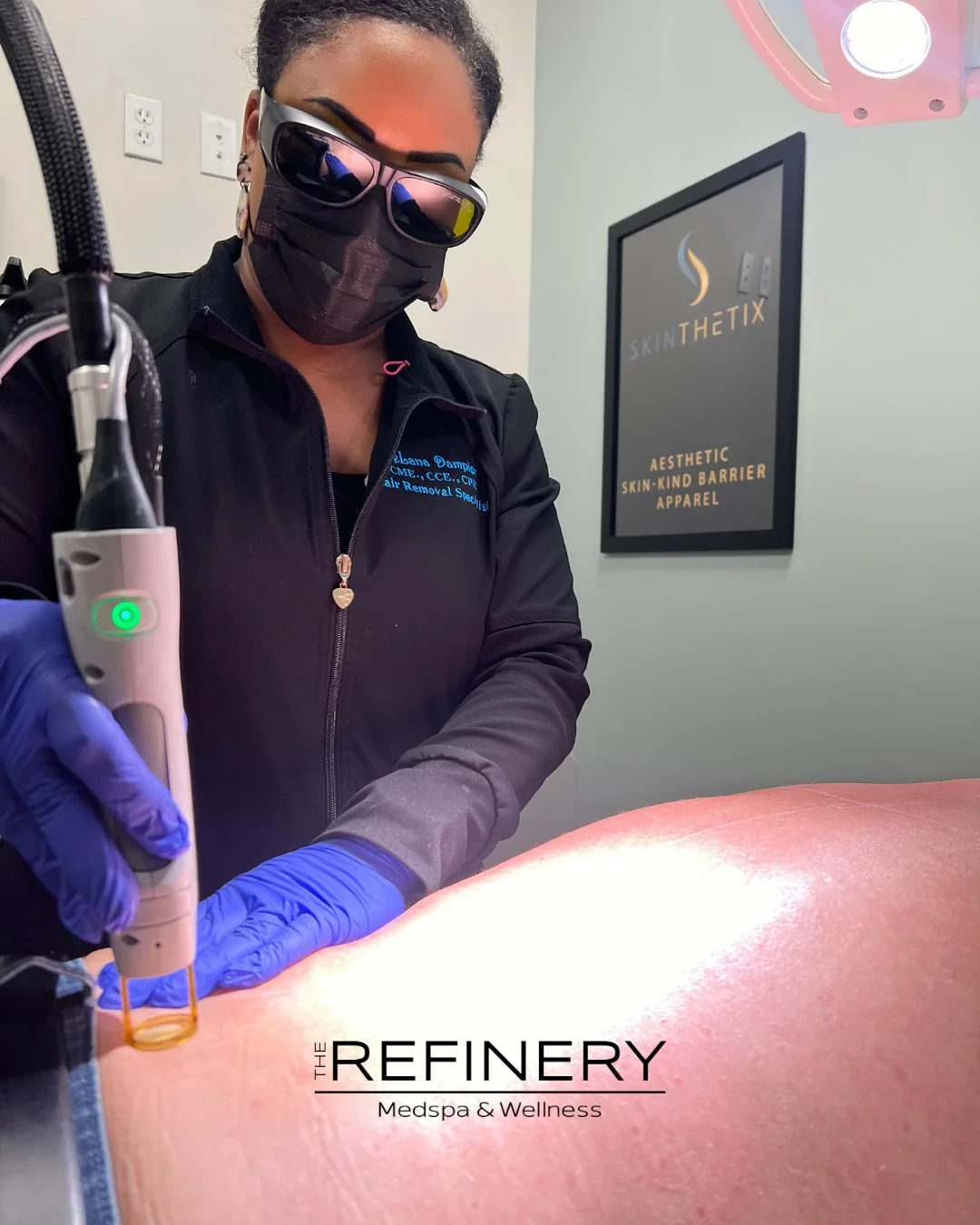
Men most often start laser hair removal on the back and chest, and the timing principles are identical. The practical difference is scale. Back and chest sessions cover large areas, and men who spend weekends fishing the Indian River Lagoon or working outdoors may find the cooler months far easier for keeping that much skin out of the sun. Beard-line cleanup follows the faster facial schedule. Details specific to men’s treatment areas are on our page for laser hair removal for men in West Melbourne.
 What Does the Research Say About Long-Term Results?
Getting the start date right is worth the effort because the result lasts. In a 2025 study of 40 women with lighter skin types, published in JMIR Dermatology, treatment with a 755 nm alexandrite laser produced underarm hair reductions of 91 to 94 percent that held through 12 months of follow-up. The alexandrite wavelength used in that study is the same type built into the GentleMax Pro.
Individual results vary with hair color and body area, and hormonal changes over the years can wake up follicles that were never treated, so occasional maintenance sessions are common. For most patients, though, laser hair removal works as a single, well-planned project followed by a touch-up now and then. That makes the start date the decision with the most influence over how smoothly the whole process goes.
Common Questions About When to Start Laser Hair Removal
Can I start laser hair removal during a Florida summer?
Yes. Summer starts work well for patients who can keep treated skin covered and protected. A provider will check for a tan at each visit and may adjust settings or reschedule if the skin has darkened since the last session.
How far ahead of a wedding should I begin?
Nine to twelve months is ideal. That window covers a typical course of about seven sessions with room for the occasional delay. Starting six months out still produces a visible reduction by the big day.
Am I too old to start laser hair removal?
Age matters less than pigment. If the hair in the area you want treated is still dark, laser hair removal can work at 55 as well as it does at 25. Gray and white hairs are better suited to electrolysis.
How long should I wait between sessions?
Facial areas are usually treated every four to six weeks and body areas every six to eight weeks. Your provider sets the exact interval based on how quickly hair returns in each area.
Laser Hair Removal at The Refinery in West Melbourne, FL
If you are reading this in the fall, the calendar is already working in your favor. The next step is a complimentary consultation, where a provider can assess your skin and hair and map out a session schedule around the dates that matter to you.
The Refinery Medspa & Wellness offers laser hair removal at its West Melbourne office, serving patients across the greater Melbourne and Palm Bay area. The office sits at 4311 Norfolk Pkwy #114, West Melbourne, FL 32904, and can be reached at 321-341-3321. We also offer payment plans to spread the cost of a treatment series, and you can book a complimentary consultation to start planning your sessions.
References
Shurrab K, et al. Long-Term Efficacy and Safety of 755-nm Alexandrite Laser for Axillary Hair Removal: A Comparative Analysis of Single vs. Dual Flash Lamp Systems. JMIR Dermatology. 2025;8:e76523. https://www.ncbi.nlm.nih.gov/pmc/articles/PMC12638035/
Laser Hair Removal. StatPearls. StatPearls Publishing, NCBI Bookshelf. https://www.ncbi.nlm.nih.gov/books/NBK507861/
Evaluation of Safety and Efficacy of Laser Hair Removal With the Long-Pulsed 755 nm Wavelength Laser: A Two-Center Study With 948 Patients. Lasers in Surgery and Medicine. 2020;52(1):77-83. https://pubmed.ncbi.nlm.nih.gov/31579971/