
Anyone who spends more than an afternoon researching collagen treatments runs into the same fork in the road. One path is classic microneedling, a staple of med spa menus for well over a decade. The other is RF microneedling, which takes the same basic idea and adds radiofrequency heat to it. The names sound nearly interchangeable, and the before-and-after photos often look alike. The price per session does not. So the question most people bring to a consultation is a practical one. Is the upgrade worth it for your skin, or does the original already do everything you need?
Microneedling is a collagen induction treatment in which a pen-shaped device creates thousands of controlled micro-channels in the skin to trigger its natural repair process. RF microneedling, also called radiofrequency microneedling or fractional radiofrequency microneedling, delivers radiofrequency energy through those same needles into the deeper layers of the skin, adding heat-driven remodeling and tightening to the repair response. Both treatments build new collagen. They differ mainly in depth and in how much tightening they can deliver, and those two differences decide which concerns each one handles best. This guide compares them side by side, with a focus on how each plays out for patients in West Melbourne and the beachside communities of Brevard County.
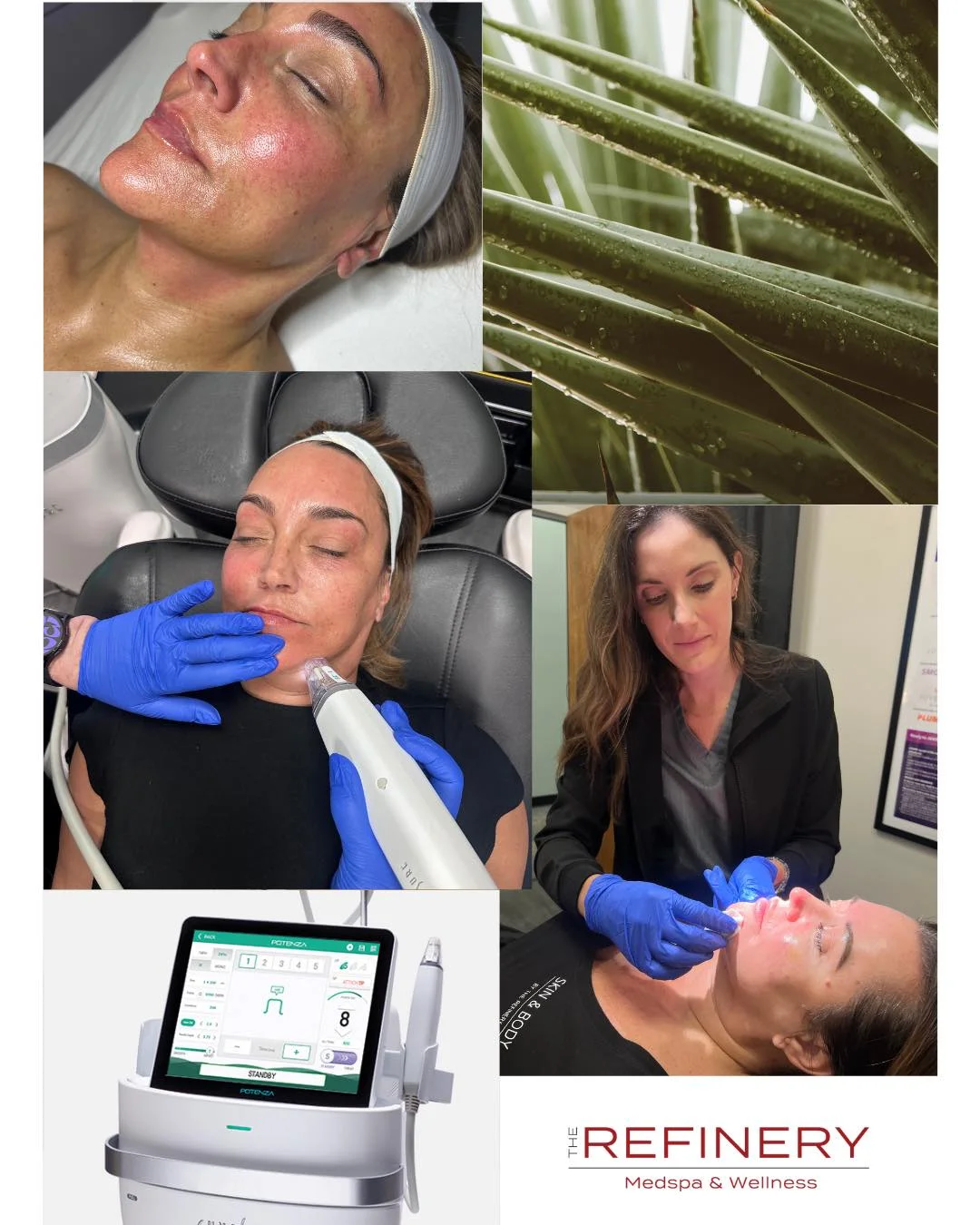
What Is Microneedling, and How Does It Work?
Microneedling is a minimally invasive procedure, known in dermatology as percutaneous collagen induction, that uses a cluster of fine sterile needles to make tiny, evenly spaced punctures in the skin. Each puncture is a controlled micro-injury. The skin reads those injuries as a signal to repair itself and responds by releasing growth factors and sending fibroblasts, the cells that produce collagen and elastin, into the treated area. Over the following weeks, that repair work lays down fresh collagen that thickens and smooths the skin from within.
At The Refinery, treatments are performed with the FDA-cleared Rejuvapen®, a motorized pen whose needle depth can be adjusted for different areas of the face. Shallow settings suit dull or uneven skin, while deeper passes reach the scar tissue that sits beneath old acne marks. The micro-channels also open a brief window in which serums absorb far better than they would through intact skin, which is why providers often apply a hydrating or growth factor serum during the session. More detail on the procedure is available on our page for microneedling in West Melbourne, FL.
What Is RF Microneedling, and What Does the Radiofrequency Add?
RF microneedling is a hybrid procedure that pairs microneedling with radiofrequency energy delivered through the needle tips themselves. The needles enter the skin to a preset depth and then release a short pulse of radiofrequency current that heats the surrounding tissue. That heat does two jobs. It causes existing collagen fibers to contract, which produces some early firming, and it creates a stronger wound-healing signal than needles alone, which drives a larger wave of new collagen and elastin over the following months.
Because the energy is released inside the skin, RF microneedling can treat the deeper dermis while sending relatively little heat to the surface. That depth is the main reason it tends to do more for loose skin and deeper scarring. The Refinery uses Potenza, a radiofrequency microneedling platform that lets the provider tune needle depth and energy separately for each zone of the face, with interchangeable tips for smaller and larger areas. The device and its treatment areas are covered on our page for Potenza RF microneedling in West Melbourne, FL.
How Do Microneedling and RF Microneedling Compare Side by Side?
The two treatments share a foundation, so most of the differences trace back to a single variable, which is the radiofrequency heat. The table below lays out how they compare on the points patients ask about most often.
| Factor | Microneedling | RF microneedling (Potenza) |
|---|---|---|
| How it works | Fine needles create micro-channels that trigger the skin’s collagen repair response | The same micro-channels, plus radiofrequency heat released through the needle tips below the surface |
| Treatment depth | Upper to mid dermis | Mid to deep dermis, adjusted zone by zone |
| Strongest results for | Rough texture, enlarged pores, shallow acne scars and uneven tone | Deeper acne scars, fine lines, early laxity and stretch marks |
| Skin tightening | Modest, through gradual collagen gains | More noticeable, from heat-driven contraction plus new collagen |
| Session length | About 45 minutes for the face | About 30 to 45 minutes for the face |
| Typical series | Several sessions spaced about four to six weeks apart | Three to five sessions spaced about a month apart |
| Downtime | Redness for a day or two, then light flaking | Redness and mild swelling for two to three days |
| Cost per session | Lower | Higher, reflecting the device and the energy delivered |
Which Skin Concerns Does Each Treatment Handle Best?
Matching the treatment to the concern matters more than choosing the more advanced device. A patient with dull skin and fine texture will often get everything they need from standard microneedling, while a patient with deep scars or a softening jawline may see little change without the added heat.
What About Texture and Enlarged Pores?
Surface concerns respond well to standard microneedling. Rough texture and enlarged pores live in the upper layers of the skin, as does much of the blotchiness that years of Florida sun leave behind. Needle-induced collagen and faster cell turnover make a visible difference there after a few sessions. For many patients in their twenties and thirties this is the entire goal, and standard microneedling reaches it at a lower cost per visit.
What About Acne Scars?
Acne scars are where the comparison gets more nuanced. Both treatments improve atrophic scars, the depressed marks left behind when inflammation destroys collagen in the dermis. Rolling and boxcar scars, which have soft or flat bases, tend to respond best to either approach. Narrow icepick scars are harder to move with any needling device. RF microneedling has the edge when scars are deep or tethered to the tissue below, because the heat remodels scar tissue at the depth where it formed. Patients with mild, shallow scarring often do well with standard microneedling alone. Our page on acne scar treatment in West Melbourne covers the wider set of options.
What About Loose Skin and Fine Lines?
Skin laxity is the clearest dividing line between the two. Standard microneedling builds collagen gradually but does little to tighten skin that has started to soften along the jaw and neck. RF microneedling was built for that problem. The thermal energy tightens collagen fibers in the deeper dermis and sets off a stronger rebuilding phase, which makes it a common choice for mild to moderate laxity along the jawline and for crepey skin on the neck. More advanced sagging usually calls for a broader plan, and our guide on how PDO threads tighten sagging jowls explains one way patients add a mechanical lift.
What Does the Research Say About Both Treatments?
Both treatments rest on a sizable body of clinical evidence, particularly for scarring. A 2020 review in Clinical, Cosmetic and Investigational Dermatology examined 58 studies covering 1,845 patients treated with microneedling or fractional radiofrequency microneedling for scars, and found that both approaches improved scar appearance from baseline with no serious adverse events reported. The authors also described patient satisfaction as high across the studies they reviewed.
What the research shows less clearly is a single winner. Head-to-head trials have produced mixed results, partly because protocols vary widely in needle depth and in how many sessions patients receive. The practical takeaway for patients is that both methods work, and the better choice depends on matching the tool to the depth and type of the concern. A provider who performs both treatments regularly will usually make that call more reliably than any one study can.
How Do Downtime and Comfort Compare?
Both treatments begin the same way. The provider cleanses the skin and applies a topical numbing cream, and once it takes effect, most patients describe the sensation as vibration or light pressure more than pain. RF microneedling adds a brief warm or prickling feeling with each pulse, and the provider can adjust the energy to keep it comfortable. A facial session usually takes 30 to 45 minutes of active treatment, plus time for the numbing cream beforehand.
Recovery looks similar on paper and feels slightly different in practice. After standard microneedling, skin looks flushed, much like a mild sunburn, for a day or two. As the redness fades it often takes on a dry, sandpaper texture that flakes away within the week. RF microneedling tends to bring a bit more swelling, and higher settings can leave faint pinpoint marks in a grid pattern that fade over several days. Most patients return to work the next day after either treatment, and providers generally ask patients to skip strenuous exercise for 24 hours.
Sun protection is the one rule that applies to both without exception. Freshly treated skin is more vulnerable to UV damage and to post-inflammatory hyperpigmentation, so daily broad-spectrum SPF 30 or higher is part of the aftercare. On the Space Coast, that also means planning sessions around beach days and time on the water, at least for the first week.
How Many Sessions Will You Need, and When Will You See Results?
Collagen sets the schedule for both treatments. Skin often looks brighter within a week of a microneedling session as the surface turns over, but the structural change from new collagen builds across the following two to three months. Most patients book a series of microneedling sessions spaced about four to six weeks apart, with the exact number depending on whether the goal is general refinement or scar revision.
Potenza typically calls for three to five sessions spaced about a month apart. Because each pulse of heat triggers a longer remodeling phase, RF microneedling results often keep improving for several months after the final session, with tightening that becomes easier to see around the three-month mark. Both treatments benefit from a maintenance session once or twice a year to keep collagen production active as the skin continues to age. The slow build will feel familiar to anyone who has read our Sculptra collagen growth timeline, since every collagen treatment runs on the body’s clock.
Which One Is Right for Your Skin?
The simplest way to choose is to start with the concern and work backward to the tool. Age and budget play a role, but the deciding factor is usually the depth of the problem. A practical rule of thumb splits along these lines:
- Standard microneedling fits best when your main goals are smoother texture and a brighter complexion with little or no loose skin to address, or when you want a lower cost per session as a first step into collagen treatments.
- RF microneedling fits best when you are dealing with deeper acne scars or stretch marks, or when early laxity along the jawline has started to change the shape of your lower face.
Men follow the same logic, with one practical difference. Thicker skin through the cheeks and beard area often tolerates deeper settings, which can make either treatment effective for old acne scarring. Our page on microneedling for men in Melbourne, FL covers treatment areas specific to male patients.
If your main concern sits near the surface of the skin, such as dullness or rough texture, standard microneedling is usually the right place to start. If it sits deeper, such as scarring with a firm base or skin that has begun to loosen along the jaw, RF microneedling is usually worth the higher cost per session. When both kinds of concern are present, many patients alternate the two across a longer plan, and a provider can map out that sequence at a consultation.
Is Either Treatment Safe for Darker Skin Tones?
Both treatments are generally considered suitable for a wide range of skin tones, which sets them apart from many resurfacing lasers. Standard microneedling delivers no heat or light, so it carries a low risk of pigment changes when performed at an appropriate depth with good aftercare. RF microneedling releases most of its energy below the surface, and insulated needle tips can further protect the outer layer of skin, which makes it a frequent choice for patients with medium to deep skin tones who want stronger remodeling. A provider will still review pigment history at the consultation, since anyone prone to post-inflammatory hyperpigmentation may need a gentler start or a few weeks of preparatory skincare.
Some patients are better served by waiting. An active breakout or skin infection in the treatment area is a common reason to delay, and so is pregnancy. Anyone who has taken isotretinoin for acne recently should discuss timing with their provider before either treatment. RF microneedling carries one additional caution for people with pacemakers or other implanted electronic devices, which is part of the screening before a first session.
Can Microneedling and RF Microneedling Be Combined With Other Treatments?
Yes, and combination plans are often where patients see their best results. Standard microneedling pairs naturally with platelet-rich plasma, in which growth factors concentrated from a patient’s own blood are applied over the fresh micro-channels to support healing. Our page on PRP therapy in Melbourne, FL explains how that pairing works. RF microneedling sits well alongside injectables, since the collagen-building heat improves skin quality while fillers and neuromodulators address volume and movement.
For patients focused on firmness, TempSure Envi skin tightening in Melbourne, FL uses surface radiofrequency with no needles and can extend the tightening effect between RF microneedling series. Sequencing matters with every combination, so a provider will space treatments to give the skin time to recover between them.
Common Questions About Microneedling and RF Microneedling
Is RF microneedling more painful than regular microneedling?
Slightly, for most people. Both treatments use numbing cream, and the needling itself feels much the same. The radiofrequency pulse adds a short burst of warmth that the provider can turn down if needed, and most patients find both very tolerable.
Can I start with microneedling and move to RF microneedling later?
Yes. Many patients begin with standard microneedling for surface concerns and switch to RF microneedling once laxity or deeper scarring becomes the priority. The collagen built in earlier sessions carries forward, so nothing is lost by starting with the simpler option.
How long do the results last?
New collagen can last for years, although natural aging keeps breaking it down. Most patients hold their results with one or two maintenance sessions a year, along with daily sunscreen and a retinoid in their evening routine.
Which treatment is better for acne scars?
That depends on the scars. Shallow, rolling scars often improve well with standard microneedling, while deeper or more fibrous scars usually respond better to RF microneedling. A provider can assess scar type in person and recommend one treatment or a combination of both.
Microneedling and RF Microneedling at The Refinery in West Melbourne
If you have been weighing the two, the quickest route to an answer is a close look at your skin by someone who performs both treatments every week. At a complimentary consultation, a provider can assess the depth of your concerns and recommend the treatment, or the combination, that fits your goals and your calendar.
The Refinery Medspa & Wellness offers microneedling and Potenza RF microneedling across the greater Melbourne and Palm Bay area. Our West Melbourne office sits at 4311 Norfolk Pkwy #114, West Melbourne, FL 32904, and can be reached at 321-341-3321. We also offer payment plans to spread the cost of a treatment series, and you can book a complimentary consultation to find out which treatment your skin needs.
References
Juhasz MLW, Cohen JL. Microneedling for the Treatment of Scars: An Update for Clinicians. Clinical, Cosmetic and Investigational Dermatology. 2020;13:997-1003. https://pmc.ncbi.nlm.nih.gov/articles/PMC7764156/
Fractional Radiofrequency Microneedling as a Monotherapy in Acne Scar Management: A Systematic Review of Current Evidence. Clinical, Cosmetic and Investigational Dermatology. 2025;18. https://pmc.ncbi.nlm.nih.gov/articles/PMC11706011/
Hendel K, Karmisholt K, Hedelund L, Haedersdal M. Fractional CO2-Laser Versus Microneedle Radiofrequency for Acne Scars: A Randomized, Single Treatment, Split-Face Trial. Lasers in Surgery and Medicine. 2023;55(4):335-343. https://pubmed.ncbi.nlm.nih.gov/36934435/