
CoolSculpting is based on a process called cryolipolysis, which uses controlled cooling to target and destroy fat cells without damaging the surrounding skin or tissue.
Fat cells are more sensitive to cold than other types of cells. When exposed to specific low temperatures, they undergo a natural cell death process.
In this blog post, we explore the science behind CoolSculpting Elite in West Melbourne and Palm Bay, FL, and why fat reduction through cryolipolysis is fundamentally different from losing weight through diet alone.
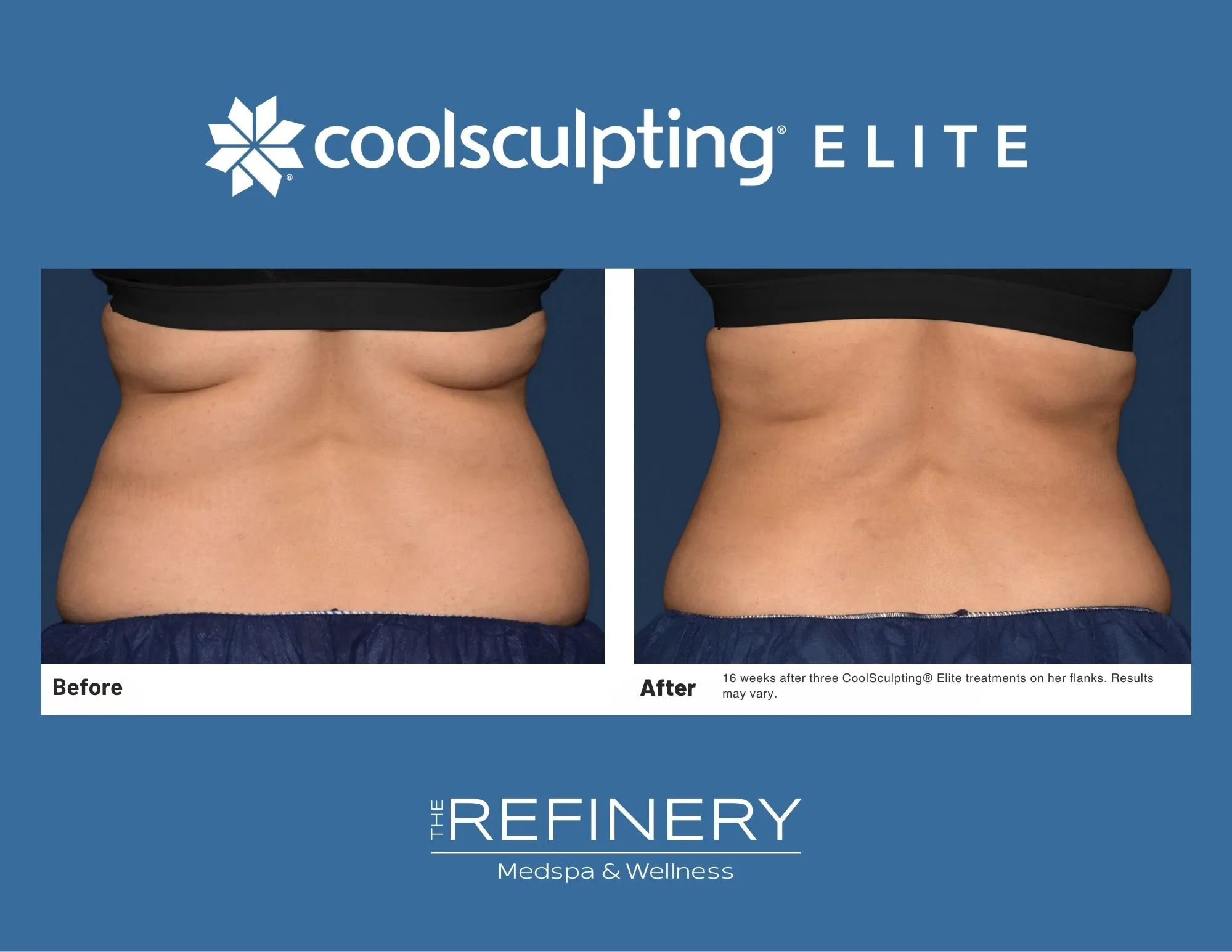
How fat cells function in the adult body
To understand why CoolSculpting results last, it helps to first understand how fat cells work under normal conditions.
Adipocytes, the clinical term for fat cells, are specialized cells whose primary role is energy storage. They absorb and release lipids depending on the body’s caloric balance. When you consume more energy than you burn, fat cells expand. When you operate at a caloric deficit, they shrink. But in both cases, the cells themselves remain intact.
Research published in Nature has shown that the total number of fat cells in the human body is largely established during childhood and adolescence. After that, the number remains remarkably stable throughout adult life. Approximately eight to ten percent of fat cells die and are replaced each year, but the overall population stays constant regardless of weight fluctuations.
This is a critical distinction. When someone loses weight through exercise and nutritional changes, they are reducing the size of their fat cells. They are not reducing the number. The cells remain in place, smaller but still fully functional, ready to expand again when conditions allow.

Even bariatric surgery, one of the most aggressive forms of weight intervention, does not change the total number of fat cells. Patients who lose massive amounts of weight through surgical procedures retain the same adipocyte count they had before. The cells deflate, but they persist.
Cryolipolysis: how controlled cooling targets fat selectively
CoolSculpting is built on a principle called cryolipolysis, a process developed by researchers at Harvard’s Wellman Center for Photomedicine. The concept originated from a clinical observation that became known as popsicle panniculitis: children who frequently consumed popsicles sometimes developed dimples in their cheeks, suggesting that cold exposure could selectively affect fat tissue.
That observation led to a deeper investigation. Researchers discovered that fat cells are significantly more vulnerable to cold temperatures than surrounding tissue types, including skin, muscle, nerves, and blood vessels. When adipocytes are exposed to precise, controlled cooling in the range of negative one to negative ten degrees Celsius, they sustain damage that neighboring cells do not.
This selectivity is what makes CoolSculpting safe and effective. The cooling targets fat without compromising the integrity of the tissue around it.
What makes fat cells more vulnerable to cold
The susceptibility of fat cells to cold injury comes down to their composition. Adipocytes are rich in lipids, which crystallize at higher temperatures than the water-based contents of other cells. When cooling is applied, the lipids within the fat cells begin to crystallize while the surrounding water-rich cells remain undamaged.
This crystallization triggers a cascade of biological events that leads to the permanent destruction of the targeted fat cells.
The process is not instantaneous. It begins during the treatment session itself and continues for weeks afterward as the body mounts a controlled immune response. But the initial damage, the crystallization of intracellular lipids, is the catalyst. Once it occurs, the cell’s fate is sealed.
The biological timeline: what happens after treatment
CoolSculpting results do not appear overnight. The body requires time to process and eliminate the affected cells. The biological response unfolds in a precise and well-documented sequence.
| Timeframe | What happens biologically |
| Day 1 | Lipid crystallization occurs within targeted adipocytes. Surrounding tissues remain unaffected. |
| Days 1–3 | Early inflammatory signals activate as the body detects damaged fat cells. Inflammatory markers begin to rise in the treatment area. |
| Days 3–14 | Macrophages and other immune cells migrate to the site. The inflammatory response peaks around day 14 as adipocytes become surrounded by histiocytes, neutrophils, and lymphocytes. |
| Weeks 4–8 | Phagocytosis is underway. Macrophages engulf and digest the contents of damaged fat cells. The fat layer begins to thin. Interlobular fibrous septa thicken. |
| Weeks 8–12 | The inflammatory response subsides. Fat volume in the treated area is visibly reduced. Clinical studies document a 20 to 25 percent reduction in the fat layer after a single treatment. |
| Months 3–6 | Final results become apparent. The body has fully processed and eliminated the damaged cells. Lipid levels and liver function remain within normal range throughout. |
Importantly, research has confirmed that cryolipolysis does not cause meaningful changes in cholesterol, triglycerides, or liver function markers during this process. The body metabolizes the released lipids safely and gradually.
Apoptosis versus necrosis: why the distinction matters
The mechanism by which CoolSculpting destroys fat cells is apoptosis, not necrosis. This distinction is medically significant.
Necrosis is uncontrolled cell death caused by acute injury. It produces a strong, often harmful inflammatory response and can damage surrounding tissues. Burns, frostbite, and trauma cause necrosis.
Apoptosis is programmed cell death, a controlled biological process in which the cell essentially disassembles itself from the inside out. The cell membrane remains intact during early stages. Internal structures are broken down in an orderly fashion. The contents are packaged into fragments that immune cells can safely absorb.
Because CoolSculpting induces apoptosis rather than necrosis, the body’s response is measured and contained. There is inflammation, but it is localized and temporary. There is no scarring, no tissue damage, and no systemic metabolic disruption.
This also means the process is gradual. Unlike a surgical procedure that produces immediate physical change, the biological work of apoptosis and phagocytosis plays out over weeks and months. The slow pace is actually an advantage. It allows the body to process and metabolize the released lipids without overwhelming any organ system. It is also why the visible change appears natural rather than abrupt.
This controlled process is also why recovery from CoolSculpting is minimal compared to surgical alternatives. Patients can typically resume normal activities immediately.
Why eliminated fat cells do not regenerate
This is the question at the center of CoolSculpting’s long-term promise: once the treated fat cells are gone, do they come back?
The evidence says no.
Under normal physiological conditions, when a fat cell dies, the body produces a replacement to maintain the established population. However, CoolSculpting creates a different scenario. The localized destruction of a significant cluster of fat cells in a targeted area overwhelms the body’s ability to regenerate in that specific region. The treated area ends up with fewer fat cells on a permanent basis.
If the body replaces roughly ten percent of its fat cells per year through natural turnover, and a CoolSculpting session eliminates 20 to 25 percent of fat cells in one zone, the body’s replacement rate cannot keep pace with the localized loss. The net result is a lasting reduction.
Long-term follow-up imaging confirms this. Patients who were assessed months and even years after treatment continued to show reduced fat thickness in the treated areas. The body does not compensate by producing extra fat cells elsewhere.
This is a fundamentally different outcome from weight loss through diet and exercise. Caloric restriction shrinks fat cells. Cryolipolysis eliminates them.
Fat loss through diet versus fat reduction through cryolipolysis
| Factor | Diet and exercise | CoolSculpting |
| Fat cell count | Unchanged | Permanently reduced in treated area |
| Fat cell size | Smaller | Cells are eliminated entirely |
| Mechanism | Caloric deficit | Cryolipolysis-induced apoptosis |
| Regain potential | Fat cells re-expand with weight gain | Treated cells cannot return; remaining cells may still enlarge |
| Targeting | Systemic (whole body) | Area-specific |
| Timeline | Ongoing effort required | Results develop over 8 to 12 weeks |
What happens to the remaining fat cells
Permanence in the treated area does not mean immunity from all future changes. The fat cells that survive treatment, both in the treated zone and elsewhere in the body, remain fully functional. They can still expand if a person gains weight.
This is why maintaining a stable weight is important for preserving CoolSculpting results. If significant weight gain occurs, remaining fat cells throughout the body will enlarge. The treated area will still have fewer fat cells than it did before, but the overall body contour may shift.
However, the proportional advantage remains. Because the treated zone has a permanently reduced fat cell count, it will always carry less fat relative to untreated areas, even in the context of moderate weight fluctuation. This is why many patients report that their clothes continue to fit better in the treated region long after the procedure, even when their weight has varied by a few pounds in either direction.
Patients who combine CoolSculpting with consistent lifestyle habits tend to be the most satisfied with their long-term outcomes. The treatment works best as one element of a broader commitment to health.
Addressing the rare exception: paradoxical adipose hyperplasia
No medical procedure is without consideration. In a very small number of cases, a phenomenon called paradoxical adipose hyperplasia (PAH) has been reported. In PAH, the treated area develops an increase in fat volume rather than a decrease.
The incidence of PAH is rare. Published reports have documented fewer than 40 cases across the global clinical literature. The exact mechanism is not fully understood, though several hypotheses are under investigation. Risk factors have not been clearly established, and the condition does not appear to be linked to provider technique or patient body type.
PAH does not resolve on its own. Surgical correction through liposuction is the established approach. This is one reason why honest, thorough consultations matter. At The Refinery Medspa, every patient is screened, informed, and monitored throughout the process.
How applicator precision influences the science
The science of cryolipolysis depends on precision. Temperature must fall within a specific range. Contact must be consistent. Duration must be calibrated to the treatment area.
CoolSculpting Elite, the latest generation of the technology, uses redesigned C-shaped applicators that conform more closely to the body’s contours. These applicators cover up to 18 percent more surface area than earlier models and deliver more uniform cooling across the treatment zone. The system also employs dual applicators, allowing two areas to be treated simultaneously.
Better applicator design translates directly to better outcomes. More consistent cooling means more consistent apoptosis, which means more predictable fat reduction across the entire treated region.
Why provider experience is part of the equation
The technology does much of the work, but the provider determines how well that technology is deployed. Applicator selection, placement angle, suction calibration, and treatment duration all influence how evenly cooling is distributed and how much of the targeted fat layer is affected.
Improper placement can result in uneven cooling, leaving some areas undertreated while others receive adequate exposure. The thickness of the fat layer, the curvature of the treatment area, and even skin laxity all influence which applicator should be used and how it should be positioned. These are clinical decisions that require hands-on experience.
At The Refinery Medspa and Wellness in Melbourne, FL, consultations are designed to be thorough. We assess body composition, fat distribution, skin elasticity, and overall health before recommending a treatment plan. That level of evaluation is what separates a predictable result from a disappointing one.
If CoolSculpting is not the right fit for a particular concern, you will hear that clearly. Honest guidance is foundational to lasting results.
Complementary strategies that support lasting contour
CoolSculpting permanently reduces fat cells in a targeted area. But maintaining the aesthetic result over years depends on the broader context of how you care for your body.
- Weight stability. Even moderate weight fluctuations can cause remaining fat cells to expand. Consistency in nutrition and movement is the most effective way to protect your results.
- Metabolic support. For patients whose weight management is complicated by hormonal factors, medical weight loss therapies may provide additional support.
- Skin quality. As fat volume decreases, skin quality becomes more visible. Treatments such as RF microneedling can help maintain firmness and elasticity in the treatment area.
- Muscle tone. CoolSculpting reduces fat but does not build muscle. Patients interested in enhancing definition in treated areas may consider CoolTone for targeted muscle stimulation.
The best outcomes we see at The Refinery are among patients who approach CoolSculpting as part of a thoughtful plan, not an isolated event.
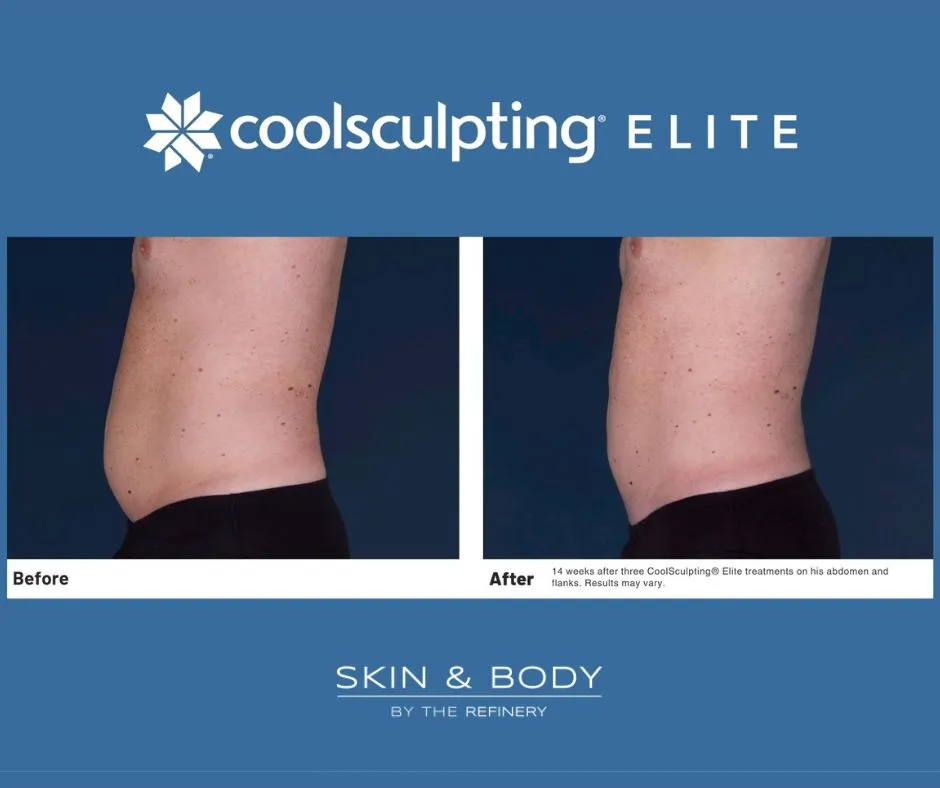
Frequently Asked Questions
Is CoolSculpting FDA cleared
How many fat cells does a single treatment eliminate
Can CoolSculpting cause fat to grow elsewhere
Will I need multiple sessions
Is the fat reduction truly permanent
Does CoolSculpting affect cholesterol or liver function
A treatment built on biology, not marketing
CoolSculpting works because the science is sound. Fat cells are vulnerable to cold. Apoptosis is a controlled, predictable biological process. And the adult body does not regenerate eliminated adipocytes in a treated area. That combination of factors is what makes the results both real and lasting.
It is also what separates CoolSculpting from trends that rely on temporary effects. Many treatments claim to reduce fat, but few can point to the depth of clinical research and the clear biological mechanism that cryolipolysis offers. When you understand the cellular pathway, from lipid crystallization through inflammatory response to phagocytic clearance, the permanence of the results becomes not just a marketing claim but an inevitable biological outcome.
If you are considering CoolSculpting in Melbourne, FL or Indian Harbour Beach, schedule a consultation with our team at The Refinery Medspa. We will evaluate your goals honestly, explain the science clearly, and design a plan that reflects your unique anatomy.